Top 2 Reasons You Might Need HVAC Duct Replacement
Key takeaways:
• Duct sealing or ductwork repair may be all you need.
• You might need to replace your ductwork if it’s irreparably damaged.
• You might need ductwork replacement if you’re upgrading your HVAC system.
• You should ask for test results and pictures to back up why you need air duct replacement.

By Anne Fonda
Your heating and air conditioning system’s ductwork is a mostly hidden component, located in the ceiling, walls, attic, basement, or crawlspace. You may see exposed ductwork in an unfinished basement, attic, or in your crawlspace.
The supply duct system carries conditioned air throughout your home and releases it at the supply registers, generally located in the floor or at the baseboard level. The return duct system pulls air back into the system, sending it to the furnace or air handler to be heated or cooled over the evaporator coil, depending on the season and your system.
Like all mechanical systems, eventually, your ductwork will need to be replaced. But when? It depends.
Do I really need to replace my ductwork?
Maybe, maybe not. Have you noticed the signs of leaky ductwork? They can include:
- Some rooms are always hot or always cold.
- Higher utility bills without extreme temperatures or a rate increase.
- Excessive dust.
Sealing ductwork joints with mastic tape or applying an aerosol sealant from the inside are both options for fixing leaky ductwork. Your HVAC contractor can replace ductwork insulation at the same time for the best results.
You may also be able to get by with replacing certain sections of the duct system rather than replacing the entire system.
But there are two scenarios where removing old ductwork and performing new ductwork installation is the best solution. Let’s take a look.
Scenario #1: Your HVAC ductwork is old and has deteriorated beyond repair
There are two main types of ductwork in use today: flexible ductwork and rigid sheet metal ductwork. You likely have both types in your home. They’re used for different purposes and have different lifespans.
Sheet metal ductwork
Sheet metal ductwork is most often used for main trunk lines, exposed areas, and for high-efficiency systems. Metal ductwork can last more than 30 years.
Flexible ductwork/flex ductwork
Flex ductwork is frequently used in tight spaces, navigating obstacles such as joists and pipes, and the final branch run connecting the sheet metal ductwork to the register boot to help reduce noise. Flexible ducts generally last 10-20 years.
If your home was built more than 30 years ago, chances are good that some of the ductwork is deteriorating.
“When an HVAC contractor tells you your ductwork needs to be replaced, you should always ask for verification. Request clear photos of the issues they're identifying, and ask for performance data such as a duct blaster test or a blower door test. If they can’t document the problem or quantify the loss, they haven’t demonstrated that replacement is necessary.”
- Kimberly Sexton, Senior Systems Engineer

Scenario #2: You’re upgrading your HVAC system and require larger ducts or additional ductwork
If you’re replacing your HVAC system, now is the perfect time to assess your ductwork as well. A new, energy-efficient HVAC system may require an upgrade in the ductwork as well. Installing a new system without assessing the ductwork can lead to airflow problems and lower energy efficiency than expected.
When you have HVAC contractors come to your home to give you a quote on a new system, make sure they do both a Manual J calculation for system sizing and a Manual D calculation to ensure that your existing ductwork is properly sized for your new HVAC system.
Before agreeing to change ductwork, ask to see the results of testing and calculations, and have the HVAC company explain it to you in simple terms.
“Determining whether ductwork needs to be replaced starts with proper sizing, not guesswork. A Manual D calculation is essential because it shows exactly how much airflow each room requires and whether the existing ducts can deliver it.
When ductwork is oversized or undersized, the system can't move air efficiently, which means higher energy use, uneven temperatures, and unnecessary strain on the equipment. Correctly sized ducts are one of the most important factors in overall system performance.”
- Kimberly Sexton, Senior Systems Engineer
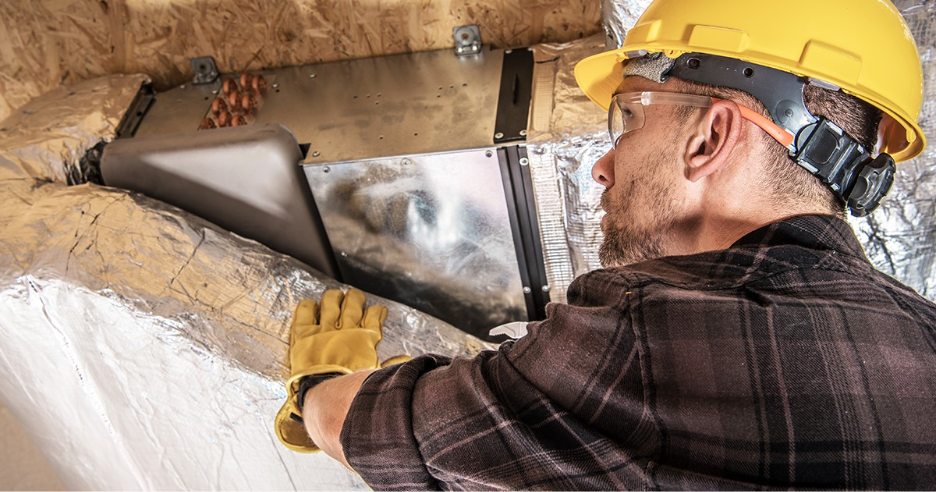
What does it cost to replace ductwork?
The cost for ductwork replacement will vary widely based on your house size, layout, access, and the scope of work. We would advise you to get multiple quotes. But you can expect ductwork replacement to add $5,000-$20,000 to the cost of system replacement.
The larger your home, the more it will cost. If access is incredibly tight, that can add to the cost as well.
The duct replacement process
- Initial inspection: A professional HVAC contractor should inspect the entire system, including attics and crawlspaces, and perform testing and a Manual D calculation before making recommendations.
- Remove existing ducts: HVAC technicians carefully remove old ductwork. They will dispose of it responsibly.
- New ductwork installation: HVAC technicians install the new ductwork, ensuring ducts are supported and properly sealed at all connections, including the register boots.
- Testing: Contractors should conduct a smoke test to ensure no leaks exist and perform a combustion safety test if you have a gas furnace.
How does replacing HVAC air ducts help you?
- Long-term energy savings: Leaky ductwork can waste energy. According to ENERGY STAR, tightly sealed and well-insulated ductwork can save you up to 20% on your heating and cooling bills.
- Improved airflow: New ductwork installation eliminates blockages, kinks, and undersized ducting that can cause uneven temperatures, making your system run more efficiently. Improved efficiency extends the life of your equipment and lowers monthly energy bills.
- Improved indoor air quality: Old and leaky ducts in the attic, crawl space, and unfinished basements can allow dirt, dust, moisture, and even small animals to enter your home.
Schedule a consultation
Whether you think you may have leaky ductwork or you’re looking into replacing your HVAC system, your local American Standard dealer can help with any HVAC project. Reach out today.
Anne Fonda, Content Writer
A Content Writer with Trane Technologies, Anne Fonda researches topics and writes for Trane® and associated residential HVAC brands. She works in collaboration with Trane Technologies subject matter experts, offering easy-to-understand, informative content on complex topics. Her goal is to help consumers make informed decisions on the products and services they need.
She has written for HVAC and other service provider websites for over 16 years. Before transitioning to web content writing, Anne had a 14-year stint as an award-winning journalist. She graduated cum laude from the University of Missouri-Columbia School of Journalism.
When she’s not working, Anne enjoys playing word games, reading, gardening, spending time with family, and visiting gardens and museums.
Expert review by Kimberly Sexton, Senior Systems Engineer
Related articles