Energy-Efficient HVAC Systems: Save Energy & Enhance Comfort
Key takeaways:
• An energy-efficient HVAC system can help you reduce your energy consumption, potentially helping you save money on heating and cooling bills for years to come.
• A more efficient system will cost more upfront.
• A more efficient system will provide a higher level of comfort.
By Anne Fonda with Expert review by Mark Woodruff, Senior Product Manager, Ducted Outdoor
Saving on energy costs isn’t just good for our wallet — it’s good for the environment, too. With all of the pollutants pumped into the air every year around the world, cutting down on emissions and energy consumption can help make the air we breathe cleaner while saving some money.
An energy-saving heating and cooling system is important
Did you know that for the average American home, more than 50% of energy usage stems from the heating and cooling system? According to the U.S. Energy Information Administration (EIA), on average, 52% (in 2020) of a household’s annual energy consumption is due to heating and air conditioning.
Because your HVAC system makes up such a large portion of energy use, it makes sense to try and maximize efficiency to reduce consumption and potentially reduce your utility bills. The most efficient HVAC systems use variable speed technology to offer precise temperature and humidity control.
“Just like a car that can speed up or slow down as needed, HVAC systems with more speeds or stages can fine-tune your home’s comfort while using less energy. The more options your system has, the better it can match your needs and help keep energy bills in check.”
- Chelsea Hudson, Product Manager, Variable Speed Ducted Outdoor
American Standard offers a variety of energy-efficient HVAC single-stage, multi-speed, and variable speed systems to suit your home, your climate, and your budget.
To make the right choice in a new energy-efficient HVAC system for your home, it’s helpful to know about the various energy efficiency metrics: SEER2, HSPF2, and AFUE. The higher the numbers, the more efficient a unit is.
Seasonal Energy Efficiency Ratio (SEER2) for AC units and heat pumps
A central air conditioner or heat pump’s SEER2 (Seasonal Energy Efficiency Ratio) measures its cooling efficiency over an entire cooling season, in temperatures ranging from 65°F to 104°F. The most energy-efficient air conditioners and heat pumps will have SEER2 ratings in the high teens and 20s.
Multiple American Standard heat pump and air conditioning systems carry some of the highest ratings in the industry, including the Platinum Series — giving you the energy efficiency and cool comfort you want with the dependability you need.
Heating Seasonal Performance Factor (HSPF2) for heat pumps
AnHSPF2 (Heating Seasonal Performance Factor) rating is a heating efficiency metric specific to heat pumps.It measures a heat pump’s efficiency at heating over an entire heating season. Standard heat pumps and cold climate heat pumps (CCHPs) with higher HSPF2 ratings will be more energy efficient at heating your home.
Work with your American Standard dealer to select the right heat pump for your heating and cooling needs.
Annual Fuel Utilization Efficiency (AFUE) for gas furnaces
If you live in an area with frigid winters, you may want a high-efficiency furnace with a high AFUE (Annual Fuel Utilization Efficiency) rating. A gas furnace with a lower AFUE would pair well with an electric heat pump in a dual-fuel heat pump system.
Other ways to make your energy-efficient HVAC system even more efficient
1. Add a smart thermostat
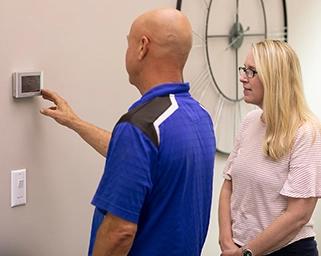
Use an American Standard smart thermostat to control your system from the palm of your hand with the Home App. Raise or lower the temperature while you’re away from home, based on the season. Enable geofencing and let your smart thermostat get your home to the perfect temperature as you approach. Enable diagnostics for maximum benefit.
“Smart thermostats paired with an intuitive app fundamentally change how homeowners interact with their HVAC systems. Not only does this technology deliver greater energy efficiency and cost savings, but it also empowers users to take control of their comfort from anywhere—at home or on the go.”
-Caitlin Butler, Product Manager, Thermostats and Home App
2. Stay on top of HVAC maintenance
Did you know that a dirty air filter can make your HVAC system work harder and use more energy? Regular HVAC air filter replacement (every 30-90 days) can help your system run as efficiently as it should. In addition, make sure your registers and return air vents aren’t blocked by furniture or drapes.
“Regular maintenance is always the best way to extend the life of your system and have the highest level of overall reliability. Fixing small problems over time can prevent bigger issues later.”
-Mark Woodruff, Senior Product Manager, Ducted Outdoor
Schedule professional HVAC maintenance each spring and fall before cooling or heating season begins. A professional tune-up can help your system run at peak performance. Consider an HVAC service contract for convenience and potential savings.
3. Weatherize your home
Ideally, you weatherize your home before investing in a new HVAC system. By sealing and caulking cracks and crevices, adding insulation, and upgrading to more efficient windows and doors, you can impact the system size you need to heat and cool your home. A system with a smaller capacity will cost less than a system with a larger capacity.
Read more about the top energy-efficient home improvements that can help you save energy and money.
Stack financial incentives
Save on the upfront cost of a new energy-efficient HVAC system by taking advantage of financial incentives. States, local utilities, and HVAC manufacturers offer rebates on various qualifying HVAC units. Heat pump rebates offer the largest financial incentive.
Energy-efficient heating and cooling from American Standard
Energy-efficient does not mean breaking the bank. Explore HVAC financing to get the energy-efficient system you need today, with manageable monthly payments. Plus, with an energy-efficient heating and cooling system from American Standard, you can be sure that everyone in your home will be comfortable. If you’re ready to replace an old and inefficient HVAC system, contact one of our American Standard Customer Care dealers.
Anne Fonda, Content Writer
A Content Writer with Trane Technologies, Anne Fonda researches topics and writes for Trane® and associated residential HVAC brands. She works in collaboration with Trane Technologies subject matter experts, offering easy-to-understand, informative content on complex topics. Her goal is to help consumers make informed decisions on the products and services they need.
She has written for HVAC and other service provider websites for over 16 years. Before transitioning to web content writing, Anne had a 14-year stint as an award-winning journalist. She graduated cum laude from the University of Missouri-Columbia School of Journalism.
When she’s not working, Anne enjoys playing word games, reading, gardening, spending time with family, and visiting gardens and museums.