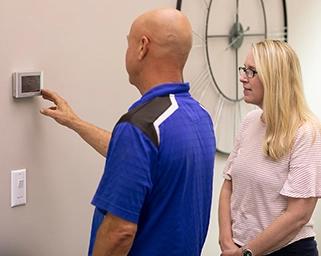
What Is Aux Heat on My Thermostat?
Key takeaways:
• When AUX displays on your thermostat, it means your heat pump system is running on auxiliary heat.
• This means either a gas furnace in a dual-fuel system or electric resistance heat strips in an all-electric system are providing heat.

By Anne Fonda
What does auxiliary heat mean?
Auxiliary means supplemental, or backup. So, aux heat means supplemental or backup heat. If your heat pump system has electric heat strips installed in the air handler as the secondary heat source, they will activate when your heat pump is struggling to provide 100% of your home’s heating needs.
If your heat pump is sized correctly and has the right heating capability for your climate, these electric heat strips may seldom come into play. But they can offer peace of mind and comfort in freezing temperatures.
“Auxiliary heat is a smart backup feature that ensures your home stays comfortable even on the coldest days, providing reliable warmth when your heat pump needs extra support. With advancements in cold climate heat pump technology, many homeowners find that auxiliary heat is rarely, if ever, needed—meaning you can enjoy consistent comfort and energy savings throughout the winter season no matter the system you select.”
- Chelsea Hudson, Product Manager, Ducted Variable Speed Outdoor

If you have a dual-fuel heat pump system where your electric heat pump is paired with a gas furnace, AUX will appear on your thermostat when the furnace is running as the backup heating system.
The furnace takes over heating when the outdoor temperatures drop below a certain point, generally below freezing with a traditional heat pump, but in the single digits with a cold climate heat pump (CCHP). When temperatures rise and the heat pump kicks in again, AUX will go away.
When should aux heat kick in?
Your auxiliary heat source should come on when your heat pump is struggling to heat your home.
The thermostat will trigger Aux heat when:
- The outside temperature is below a set aux heat trigger temperature.
- The heat pump is in defrost mode.
- If you raise the heating temperature by more than 3-4°F.
That last one is because your heat pump system can take a while to raise the temperature in your home. If you suddenly raise the temperature by quite a bit, the thermostat will trigger aux heat to help reach the new set temperature faster.
Is it bad if auxiliary heat comes on?
No. It simply means your HVAC system is changing how it heats your home. However, if aux heat comes on and stays on even when outdoor temperatures are above your aux heat trigger temperature, you should call for HVAC service.
Does auxiliary heat cost more?
It may. Electric resistance heat strips are less efficient than your heat pump, so you may see a change in your electric bill. However, the added warmth can be worth it. If your gas furnace comes on, your costs may or may not be more, depending on the cost of electricity vs natural gas in your area.
What’s the difference between auxiliary heat vs emergency heat?
We just explained that aux heat is supplemental heat that kicks in when your heat pump is struggling to heat your home to the set temperature.
Emergency heat is a heat pump thermostat setting that should only be used in an emergency - such as your heat pump breaks down and stops working altogether. You would manually turn on emergency heat, and the system would shut the heat pump down and the auxiliary heating method would take over until the heat pump is fixed.
If you need to engage the emergency heat, call for heat pump repair right away.
How can I minimize how often aux heat kicks in?
If you want to try to maximize efficiency and minimize the use of auxiliary heat, follow these tips from HVAC pros.
If the temperature outside is below freezing, your heat pump’s auxiliary heat system will come on automatically - whether that’s a gas furnace or electric heat strips. The exception is if you have a cold climate heat pump. It can heat down to single digits or even below without aux heat.
But there are some things you can do to help minimize the need for aux heat.
- Make sure your heat pump is correctly sized for your home.
- Use a programmable or smart thermostat.
- Keep the temperature around 68 degrees.
- Wear a sweater, fleece, or hoodie instead of a T-shirt around the house.
- Bump up the temperature only one or two degrees at a time.
- Open blinds and drapes to let the sunshine in during the day, and close them at night.
- Seal windows and doors to prevent heat loss.
- Schedule regular heat pump maintenance.
Contact your American Standard dealer for help
If you’re having issues with your AUX heat running too frequently or having troubles with your thermostat or heat pump, call your local American Standard dealer today. If you have one of our smart thermostats, consider opting into American Standard Diagnostics, which can allow your dealer to troubleshoot the problem remotely and possibly fix it without ever stepping foot in your home.
Anne Fonda, Content Writer
A Content Writer with Trane Technologies, Anne Fonda researches topics and writes for Trane® and associated residential HVAC brands. She works in collaboration with Trane Technologies subject matter experts, offering easy-to-understand, informative content on complex topics. Her goal is to help consumers make informed decisions on the products and services they need.
She has written for HVAC and other service provider websites for over 16 years. Before transitioning to web content writing, Anne had a 14-year stint as an award-winning journalist. She graduated cum laude from the University of Missouri-Columbia School of Journalism.
When she’s not working, Anne enjoys playing word games, reading, gardening, spending time with family, and visiting gardens and museums.
Expert review by Chelsea Hudson, Product Manager, Ducted Variable Speed Outdoor