8 Common AC Repair Issues for Central Air Systems
Key takeaways:
• When an air conditioning system is properly installed and maintained, you can go years without needing repairs.
• As the system ages, repairs can become more frequent.
• Leave the diagnostics and repairs to a trusted HVAC professional.
By Anne Fonda
Your central air conditioning system uses the refrigeration cycle to cool your home, year in and year out. While regular AC maintenance can help you avoid problems, as your system ages, you may need to schedule air conditioning repair.
Just as you look up why your car might be making strange noises, or Google your medical symptoms, when your air conditioner isn’t working as it should, you turn to the internet to research common issues.
We’ve pulled together some air conditioning problems that may come up, in order of most common to least common. Remember, work with an HVAC professional to diagnose the problem fully and make the needed air conditioner repairs. DIY repairs can lead to bigger problems.
1. Drain pan & condensate line issues
A split system consists of the outdoor condensing unit and the indoor evaporator coil, housed within the air handler or next to your furnace. During the refrigeration cycle, the evaporator coil gets quite cold, and condensation forms.
Signs of a condensate system problem:
When all is well, this condensation drips into a drain pan and into a condensate drain line that carries the water outside your home. However, the drain pan and drain line can crack or become clogged, causing water to puddle on the floor. This might not be a big deal for an unfinished basement, but if the indoor unit is in your attic, water damage could occur.
The possible fix: Replace a cracked drain pan and clear the condensate drain line. Ask the technician how to maintain the drain line with a little vinegar to prevent future blockages.
2. AC capacitor issues
Your air conditioner has a small but important part called the AC capacitor. The capacitor sends an electrical jolt to start the AC unit’s compressor motor when the thermostat calls for cooling. Once the unit is running, the capacitor reduces its energy output but continues to supply a steady current of power to the motor until the cooling cycle finishes.
Signs of a capacitor problem:
- The AC unit is running but not cooling
- The outside unit makes a loud humming noise
- The unit is short-cycling
- The AC unit won’t turn on at all
- There’s a burning smell at the outdoor unit
If your air conditioner is showing any of these signs, turn it off at the thermostat and call for AC repair.
The possible fix:
If the problem is found to be a bad capacitor, the technician will replace it.
3. Valve issues
Your central AC unit has several valves, but the one most likely to cause a problem that you notice as a homeowner is the expansion valve. It’s a key component in regulating the flow of refrigerant through your system.
Signs of a valve problem:
- AC is blowing hot air
- Fluctuating temperatures
- Frozen evaporator coil
- Hissing or gurgling sounds at the refrigerant lines
The possible fix:
Replace the expansion valve. Clean the evaporator coil if needed. Test for a refrigerant leak. Troubleshoot for other possible connected issues.
4. Refrigerant leak
Refrigerant leaks are less common. Refrigerant lines, expansion valves, evaporator coils, or condenser coils can all be the source of a leak. A certified HVAC technician is the only person who should be working with an HVAC unit with a refrigerant leak.
Signs of a refrigerant leak:
- AC not cooling
- Frozen evaporator coil
- Low refrigerant levels
- Visible puddle of oil near the condenser, oil in the drain pan, or oily streaks on the coils
The possible fix: If an HVAC technician suspects a refrigerant leak, they may use a leak detector or perform a bubble test with soapy water or a dye test to locate the source of the leak. Some leaks can be repaired, such as a failed braze connection or the replacement of a faulty component.
Larger leaks may require more advanced and expensive parts replacement.
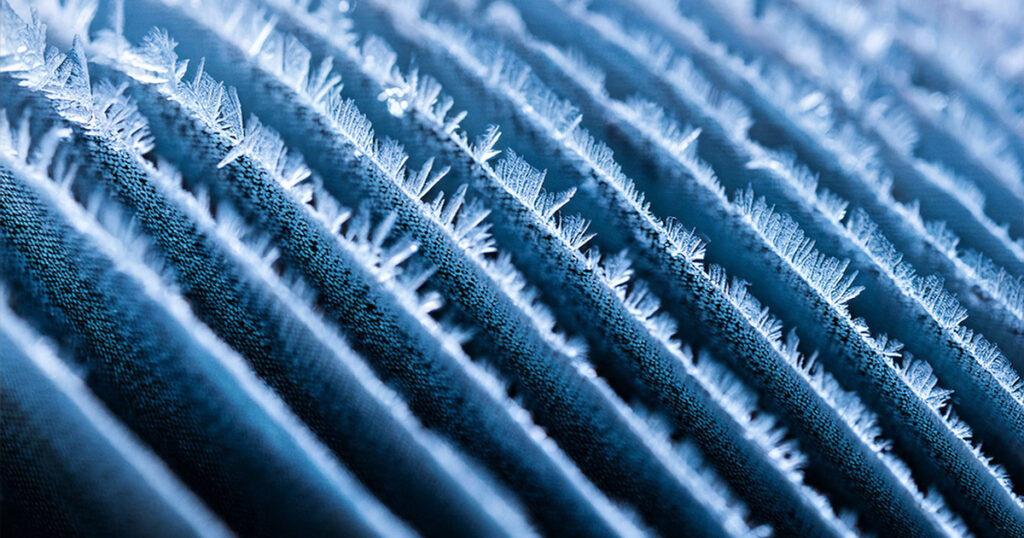
5. Frozen evaporator coil
If you have a frozen evaporator coil, you should shut the system down so the coil can thaw. Call for HVAC repair.
Signs of a frozen evaporator coil:
- AC unit running but not cooling
- AC blowing warm air
- Visible frost or icing on the coil
- Frost on the outdoor refrigerant lines
- Puddles of water near the drain pan
Except for the obvious icing on the coil or refrigerant lines, the other signs above may be a result of another problem with your air conditioner. An HVAC professional can get to the root of the problem.
The possible fix:
The HVAC technician will need to determine what caused the evaporator coil to freeze up and target the fix. Everything from dirty filters to dirty coils to a refrigerant leak can cause a frozen evaporator coil. Replacing the filter, cleaning the coil, and repairing a refrigerant leak (if possible) would be the standard fixes.
If there is a large leak in the evaporator coil, the technician might recommend replacing the coil or even replacing your cooling system.
6. Compressor issues
Your central air conditioner’s compressor is the heart of the refrigeration cycle. It pumps and circulates the refrigerant through the system, maintaining adequate pressure during the cooling cycle.
Signs of a compressor problem:
- Grinding, banging, or rattling noises from the outdoor unit
- Not cooling
- Reduced airflow
- Tripping circuit breaker
- Failure to start or overheating
- Unexpected spike in energy bill
The possible fix: Find what caused the compressor to fail, fix the underlying issues, and replace the compressor. This can be a pricey repair ($2,500-$5,000), so if your system is 12+ years old, you may want to think about replacing the heat pump.
If it’s a larger leak in one of the coils, they might say you need a new evaporator coil or condenser coil. These are pricey HVAC repairs, running upwards of $3,000 on the low end.
You will need to weigh the pros and cons of replacing the coils or replacing the entire unit. Today’s heat pump systems are more energy efficient and reliable at heating and cooling your home than those manufactured just 10 years ago, and come with exceptional warranties. Our Repair or Replace Guide has some tips to help you make the best decision.
7. Blower motor issues
Your HVAC system’s blower motor is located in your air handler or furnace. It circulates the warm or cool air throughout your home via the ductwork.
Signs of a blower motor problem:
- Loud noises from the furnace or air handler
- Weak airflow
- Frozen evaporator coil
- Overheating with a burning smell
The possible fix:
Could include repairing or replacing the blower motor. An HVAC technician will troubleshoot and determine the appropriate repair(s).
8. Electrical issues
Electrical issues can mimic other problems, which is why it’s important to have an HVAC professional thoroughly troubleshoot and diagnose the issue.
Signs of an electrical problem:
- Tripped circuit breaker
- AC stops unexpectedly
- Air conditioner won’t start
- And more
The possible fix:
The HVAC technician will need to find the root of the problem. Part of the fix might include replacing a fuse or tightening wiring. It could also be a circuit board problem, capacitor issue, or something else entirely.
What do all of these AC repairs cost?
That’s a good question. Central air conditioner repairs can range from $100 on the low end to $5,000+ on the high end. Your actual cost will depend on several factors, including:
- If the unit is under warranty and parts are covered
- The specific repairs – sometimes more than one issue needs to be fixed
- The age of your unit and if parts are readily available
- If you have an HVAC service contract with parts discount
- Local labor costs
- And more
The best way to find out what a repair will cost is to ask the HVAC technician (if someone is already at your home) or to get 3 estimates (for larger repairs). Most HVAC companies will not tell you over the phone what repairs will cost. They need to send an HVAC technician to your home to assess the situation and recommend a fix.
Be prepared for the repair or replacement conversation
If your air conditioner is older (12+ years) and you’re spending more and more money on more frequent repairs, don’t be surprised if an HVAC technician says you might be better off getting a new system.
This can be the case for more expensive repairs, such as evaporator coil replacement out of warranty. Check out our Repair or Replace Guide for some tips on making this decision.
“My advice to anyone who may have an aging system that requires frequent repairs is to consider replacing the whole system versus just one component. Typically, with an older system, the technology has become obsolete, and new parts are not completely compatible with older systems.”
-Kimberly Sexton, Senior Systems Engineer, Trane Technologies
Prevent central air conditioner problems and prolong the life of the unit with regular maintenance
A clogged HVAC air filter may seem like a small thing, but it can cause big problems, including a frozen evaporator coil and an unexpected breakdown. Get in the habit of replacing your HVAC air filter every 30-90 days to help prevent costly repairs.
Make sure to keep the return air vents and supply registers open and clear for the same reason. Closing or blocking them can restrict airflow and cause problems. You may need to move furniture or pull back heavy drapes. Outside, keep the area around the AC unit clear for two feet on all sides to help with proper airflow.
Schedule professional AC maintenance each spring before the cooling season begins. This can help keep your AC system running smoothly and prevent small issues from becoming big problems.
Consider opting into American Standard Diagnostics
If you have one of our smart thermostats, you already know how you can control your HVAC system via the Home App. What you may not know is that you can give your American Standard dealer remote monitoring capabilities to monitor the health of your system.
With American Standard Diagnostics, you can opt in to the feature in the Home App. This allows your dealer to see what is going on with your system and can help them spot performance issues early.
If they think they can fix the problem remotely, they will ask for one-time dealer remote access. This is similar to how a remote IT person might access your work computer remotely to fix an issue you’re having.
If your dealer can’t fix the problem remotely, they’ll send an HVAC technician to your home who will be equipped with the right parts and the knowledge gained during remote troubleshooting. This can save both you and the dealer time and money.
Work with trusted HVAC professionals
Whether you need to schedule air conditioner repair or AC maintenance, your local American Standard dealer has the experience you need. Whether they installed your HVAC system or someone else did, reach out to get help now.
Anne Fonda, Content Writer
A Content Writer with Trane Technologies, Anne Fonda researches topics and writes for Trane® and associated residential HVAC brands. She works in collaboration with Trane Technologies subject matter experts, offering easy-to-understand, informative content on complex topics. Her goal is to help consumers make informed decisions on the products and services they need.
She has written for HVAC and other service provider websites for over 16 years. Before transitioning to web content writing, Anne had a 14-year stint as an award-winning journalist. She graduated cum laude from the University of Missouri-Columbia School of Journalism.
When she’s not working, Anne enjoys playing word games, reading, gardening, spending time with family, and visiting gardens and museums.
Expert review by Kimberly Sexton, Senior Systems Engineer
Related articles