Furnace Filter Sizes, Explained
Key takeaways:
• A furnace filter, home AC filter, and HVAC filter are different names for the same thing.
• It’s important to understand Nominal filter size vs Actual filter size.
• The right filter can help prolong the life of your system.
• Plan to change your HVAC filter every 30-90 days
By Anne Fonda
What size air filter do I need?
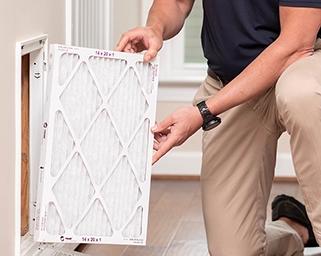
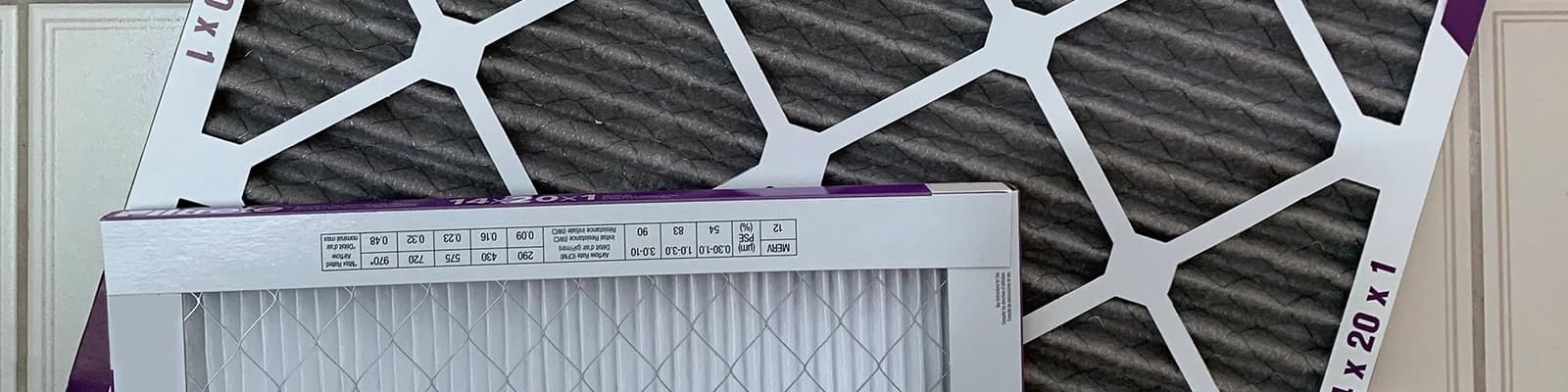
To answer this question, you need to locate your current HVAC air filter. It should have the filter size listed on the outside frame. Not sure of your HVAC air filter location? You’re not alone, especially if you just moved into your home.
A common location is next to your furnace or air handler. Look for a 1” slot at the bottom of the furnace/air handler, or on the side. Another filter location could be at a large vent on an interior wall or in the ceiling. If you have a package unit, the filter is in the outdoor unit behind the access panel.
Once you locate the filter slot, pull it out and check the measurements. In most cases, you can simply buy a filter of the same size, unless it’s obvious that the filter is too big (edges are crushed or the filter is cut to fit) or too small.
How to measure air filter size?
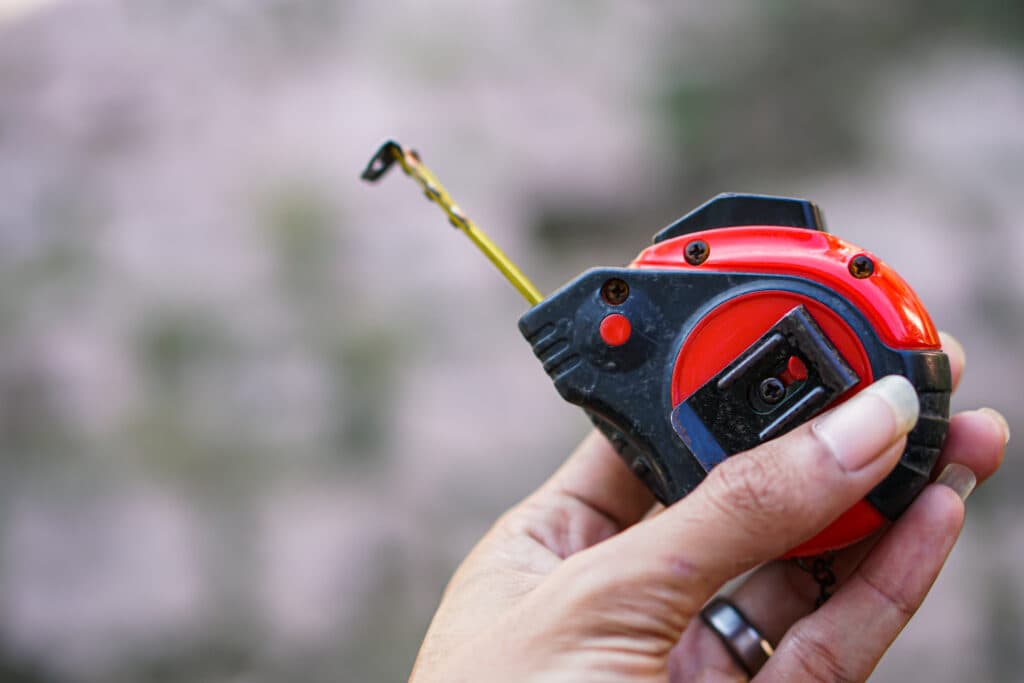
If your existing filter doesn’t have the numbers printed on it, or you think it’s too big or too small, you can measure the filter slot.
Turn off the system and use a retractable tape measure to determine the length, width, and depth of the opening, from inner edge to inner edge. Then, you will buy a replacement filter that is closest to those measurements.
What is the nominal vs actual HVAC filter size?
An air filter’s nominal size is the rounded, approximate dimensions printed on an air filter's packaging and cardboard frame for easy identification. It is not the exact measurement of the filter. The actual filter size is usually ½ to ¾ inches smaller for length (height) and width.
What are some common furnace and AC filter sizes?
Some of the most common filter sizes include:
- 16x25x1 furnace filter
- 16x25x4 furnace filter
- 16x25x5 furnace filter
- 20x25x1 furnace air filter
- 20x25x4 furnace filter
- 20x25x5 furnace filter
- 16x20x1 furnace filter
- 16x20x4 furnace filter
Get the right size furnace filter with the right MERV rating
Not only do you need to purchase HVAC filters that are the right size for your system, but you also need to make sure you get filters with the right MERV rating. MERV stands for Minimum Efficiency Reporting Value and measures the filter’s capability to capture large and small particles, measured in microns. A human hair measures 50 to 70 microns, so filtration addresses problems invisible to the naked eye.
The higher the MERV rating, the better the filter is at capturing large and small particles, as shown in the table below.
| PARTICLE TYPE | GENERIC 1” MERV 8 FILTER EFFECTIVELY FILTERS DOWN TO 3-10 MICRONS IN SIZE | MERV 11 FILTER EFFECTIVELY FILTERS DOWN TO 1-3 MICRONS IN SIZE | MERV 13 FILTER EFFECTIVELY FILTERS DOWN TO .3-1 MICRONS IN SIZE |
| POLLEN | X | X | X |
| DUST | X | X | X |
| DUST MITES | X | X | X |
| MOLD SPORES | X | X | X |
| LINT | X | X | X |
| BACTERIA/FUNGI | X | X | |
| PET DANDER | X | X | |
| SKIN FLAKES | X | X | |
| HAIR | X | X | |
| LEAD DUST | X | X | |
| VIRUSES | X | ||
| TOBACCO SMOKE | X | ||
| COOKING SMOKE | X | ||
| SMOG | X |
EFFECTIVELY FILTERS DOWN TO 3-10 MICRONS IN SIZE
EFFECTIVELY FILTERS DOWN TO 1-3 MICRONS IN SIZE
EFFECTIVELY FILTERS DOWN TO .3-1 MICRONS IN SIZE
HVAC professionals recommend a MERV rating between 8 and 13 for most residential applications. Work with your American Standard dealer to help select the right MERV rating for your filters. If the MERV rating is too high for your system, it can restrict airflow, which affects performance.
What’s the big difference between a 1-inch filter and a 4-inch filter?
Other than the obvious difference in thickness, the 4” filter (or a 5” filter) has a larger surface area. These thicker filters are generally pleated filters and can be less restrictive to air flow than a 1” filter, while still capturing tiny particles. You can also have a higher MERV rating on a 4” filter than you can on a 1” filter without restricting airflow.
Is a 4” filter worth it?
Maybe. The larger surface area means the filter can capture more particles before it is considered dirty. This means you shouldn’t have to replace the filter every month. That’s convenient. In addition, you can have a higher MERV rating with a 4” filter vs a 1” filter. This can be important if someone in your family has allergies or asthma.
Most HVAC systems have a standard 1” filter slot. However, if someone owned your home before you, you may already have a 4” filter cabinet and should be using 4” filters already. Otherwise, if you want, you can have a new filter cabinet installed.
If you decide to upgrade, you should hire an HVAC professional to assess your system and the airflow, static pressure, and more. They can test your system with a MERV 8, MERV 11, AND MERV 13 filter to determine the best MERV rating for your system.
You should know that 4” filters cost more than 1” filters, but since you’re replacing them less often, the cost can even out.
How often to change the furnace filter?
“Minimally, the change of each season is a great time to replace your air filters. Pair a filter change with other seasonal chores like checking the batteries in your smoke detectors.”
- Sean Goddard, Product Manager, Coils & Indoor Air Quality
In general, you should change the HVAC air filter every 1-3 months. How often you should change your furnace filter will depend on the quality of the filter, the MERV rating, filter thickness, if you have pets, whether it’s pollen season, and more.
For example, if you have pets or it’s pollen season, you may need to change your air filter more often. Since a clogged filter can reduce efficiency and lead to early repairs, regular HVAC air filter replacement is one of the biggest things you can do to protect your HVAC system.
How to change a furnace filter?
First, turn your HVAC system off.
After you have located the filter slot/filter cabinet, open the door or grate and pull the old filter out. Insert the new filter with the HVAC air filter direction arrow pointing towards the furnace or air handler and away from the return air duct. If your filter is in the wall or ceiling, the arrow should point into the ductwork and away from the room.
Once the filter is securely in place, close the cabinet door or grate and turn your system back on.
Be prepared, and order filters in bulk
The easiest way to ensure you always have a new HVAC filter on hand is to order in bulk, and set up an automatic subscription, either with your American Standard dealer or an online service. You don’t want to make a special trip to a big box store when it’s time to change the filter.
If you have a smart thermostat, it should tell you when you need to change the filter. Otherwise, set a repeating calendar event in your smartphone to remind you to check and/or replace the filter. The simple task of replacing your filter can enhance performance and help prolong the life of your HVAC system. Seems worth the effort, right?
Consider a whole-house air cleaner if you have allergies or asthma
A quick note about advanced whole-house air purification systems – they can capture smaller particles than your standard HVAC air filter. If you or a family member suffers from allergies, asthma, or another respiratory condition, adding a whole-house air cleaner can be worth the investment.
American Standard has two:
The QuikBox™Air Cleaner, which is a 4.7” pleated filter available in MERV 11 and 13. It can be up to 20 times as effective as a standard air filter, and can last up to 6 months before you need to replace the filter.
Meanwhile, the AccuClean® Whole-Home Air Cleaner has a reusable filter that you can clean. It offers superior filtration and can capture up to 99.98% of allergens and pollutants. It’s certified asthma & allergy friendly® by the Asthma and Allergy Foundation of America (AAFA).
“A whole-home air cleaner rewards occupants with a simple solution to purified air throughout the home without having to uniquely hassle with multiple devices in each room. It is the simplest solution to address allergies, asthma, and respiratory issues throughout the entire home.”
- Sean Goddard, Product Manager, Coils & Indoor Air Quality
Contact your local American Standard dealer today
If you’re interested in a whole-home air cleaner or getting replacement filters from someone you know and trust, contact your local American Standard dealer today. They can answer any questions you may have about your HVAC system and your air filtration system, and help you choose the right system for your needs.
Anne Fonda, Content Writer
A Content Writer with Trane Technologies, Anne Fonda researches topics and writes for Trane® and associated residential HVAC brands. She works in collaboration with Trane Technologies subject matter experts, offering easy-to-understand, informative content on complex topics. Her goal is to help consumers make informed decisions on the products and services they need.
She has written for HVAC and other service provider websites for over 16 years. Before transitioning to web content writing, Anne had a 14-year stint as an award-winning journalist. She graduated cum laude from the University of Missouri-Columbia School of Journalism.
When she’s not working, Anne enjoys playing word games, reading, gardening, spending time with family, and visiting gardens and museums.
Expert review by Sean Goddard, Product Manager, Coils & Indoor Air Quality